It arrives every day, right on schedule. Somewhere between 2 and 4pm your brain quietly clocks off, your eyelids get heavy, and the sentence you've read four times still refuses to go in.
The 3pm slump isn't a personal failing and it isn't just your lunch. It's biology. Your body runs on a roughly 24-hour internal clock, and that clock has a natural dip in alertness in the early afternoon - a smaller echo of the one that sends you to sleep at night. Some cultures built the siesta around it. Most of us just fight it with biscuits.
You can't delete the slump. But you can plan around it, and that turns out to be far more effective than trying to power through.
Match the work to the hour
The simplest energy management trick is to stop treating every hour of the day as interchangeable. They're not.
Morning (roughly 9am to 12pm) is prime time for most people. Focus is highest, willpower is fresh, and distractions haven't piled up yet. Guard it. This is when the hard thinking should happen - writing, planning, problem-solving, anything that needs your full brain. Resist the temptation to spend it on email. Answering emails at 9:30am is like using a sports car to pop to the bin.
Early afternoon (roughly 2 to 4pm) is when the dip hits. Rather than forcing deep work through it, schedule your shallow work here: calls, admin, replying to messages, tidying your inbox, booking things. Conversation is actually a decent slump activity - talking to another human is naturally stimulating in a way that a spreadsheet is not. If you have any say over when your meetings land, this is the window for them.
Late afternoon (4pm onwards) often brings a second wind. It's a good slot for lighter creative work, reviewing what you did in the morning, or planning tomorrow so future-you can start fast.
None of this is rigid - night owls run a couple of hours behind - but the principle holds: put your best hours on your hardest work, and stop feeling guilty that 3pm-you isn't as sharp as 10am-you. They're different people.
The reset walk (this is where Folkestone spoils us)
When the slump hits properly, the worst thing you can do is stay at your desk staring at the same screen with slightly worse eyes. The best-evidenced fix is embarrassingly simple: get up, go outside, and move. Ten to twenty minutes of daylight and walking does more for afternoon alertness than another coffee, and it doesn't wreck your sleep that night.
And if you're going to be slumped somewhere, Folkestone is a very good place to do it. All of these are doable from Tontine Street inside a lunch break or a mid-afternoon reset:
The Harbour Arm loop. Down through the old Harbour Station walkway - a restored piece of railway history that's now a promenade - and out along the Arm towards the lighthouse. Sea air, Channel views, and on a clear day you can see France, which is a genuinely odd thing to be able to do on a work break. Twenty-five minutes there and back at a brisk pace.
Sunny Sands. If the tide is low, take your shoes off and walk on actual sand for ten minutes. Keep an eye out for Antony Gormley's bronze figure standing out in the harbour at low tide - one of the stranger and better perks of working in this town.
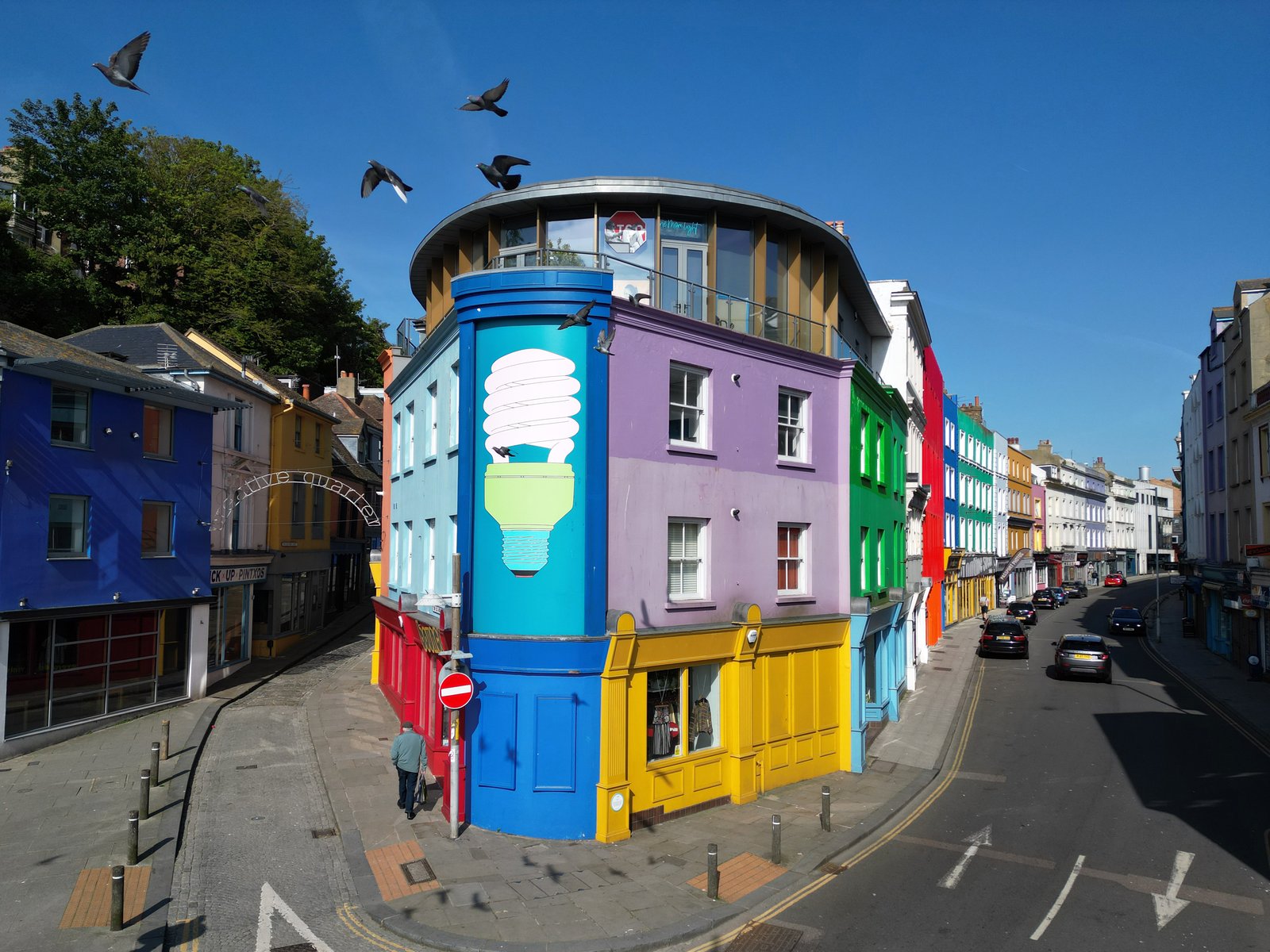
The Creative Quarter wander. For days when the weather isn't cooperating, a loop up the cobbles of the Old High Street past the galleries and shops still gets you moving and gives your eyes something new to look at. Different input, different thoughts.
Lower Leas Coastal Park. A slightly longer one, but the boardwalk connecting the beach to the Harbour Arm is a lovely flat stroll, and the park itself is one of the nicest green spaces on the Kent coast. Save it for the days when the afternoon is a write-off anyway and a proper walk will rescue more than it costs.
The trick is to treat the walk as part of the workday, not a guilty escape from it. You'll do more in the ninety minutes after a sea walk than in three hours of grinding through the fog.
Small fixes that actually help
A few extras worth knowing:
Time your caffeine. A coffee at 1:30pm, just before the dip, works better than a panic coffee at 3:30pm - caffeine takes a while to kick in. And anything after about 3pm starts borrowing from tonight's sleep, which is how tomorrow's slump gets worse.
Eat a lighter lunch. A huge carb-heavy lunch deepens the dip. You don't need to eat like a monk, just maybe not a roast dinner on a Tuesday.
Drink some water. Mild dehydration feels remarkably like tiredness. Sometimes the slump is just thirst wearing a disguise.
Change your scenery. If you can't get outside, even moving to a different seat helps. It's one of the quiet advantages of working somewhere with sofas, benches and desks to choose from - a change of spot is a soft reset for your brain.
The takeaway
Stop fighting your body and start scheduling around it. Deep work in the morning, calls and admin in the dip, and when 3pm lands hard - and it will - step outside. You work five minutes from the sea. Use it.